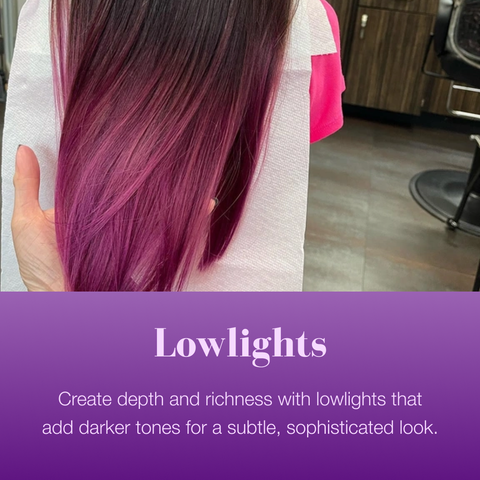

Why lowlights add depth
Lowlights are darker color woven into the hair to add depth and reduce the contrast created by bright highlights. In Vienna’s seasonal cycle, many clients use lowlights to tone down summer brightness and create a richer fall palette. The result softens visible regrowth and can make hair appear shinier and more integrated without removing existing lighter work.
Choosing lowlights is a trade-off between dimension and maintenance: darker tones hide root contrast and age more gracefully between color appointments, but they also shift overall tone and may need coordination with prior lightening. For busy commuters and families around Tysons and Vienna, lowlights offer a lower-maintenance option that still delivers a polished, multi-dimensional appearance.
Combining lowlights with a cut
When paired with a cut, lowlights can be strategically placed to enhance movement and reduce visual weight. A precise cut addresses bulk and frizz so darker strands fall and reflect light cohesively. For clients with frizz-prone or dense texture, this coordinated approach helps the color read more smoothly and produces more reliable styling results in Vienna’s humid summers.
Yes — lowlights and a cut are commonly done in the same appointment after a consult confirms hair history and desired depth. Kim Professional Haircolorist offers practical scheduling for commuters and event-goers in the Westwood Center/Tysons Corner area, making it easier to get color and shaping before or after work and local events.
Choosing color and upkeep
Selecting the right lowlight shades depends on your natural base, previous lightening, and desired contrast. A stylist will review any existing highlights and choose deeper tones that blend without muddying color. Clients who have had significant lightening require a careful assessment so lowlights sit harmoniously with lighter sections and maintain overall shine and a healthy appearance.
Plan timing around seasonality: many Vienna clients book lowlights in September through November to cool summer brightness and add richer tones for autumn. Climate factors such as humid summers may influence styling and product choices, so discuss daily routines with your stylist. Bringing reference photos and notes on previous color helps create a balanced plan that fits your schedule.